Culinary Healing: The Research Behind The Plate

Developed by Dr. Syerra L. Donaldson
Exploring the intersection of food, psychology, cultural identity, and emotional wellness through culturally informed research and community- based education.
" Healing has a seat at the table,"
THE RESEARCH THAT STARTED IT ALL
Healing Through the Plate: A Culturally-Informed Culinary Therapy Program for Mental Health and Emotional Wellness in Low-Income Black Communities
- Food is more than something we consume. It carries our traditions, memories, emotions, cultural identities, and lived experiences. Yet conversations about nutrition and wellness often overlook the psychological, social, and cultural factors that influence our relationship with food.Through my doctoral research, I explored how culturally informed culinary experiences could create opportunities for emotional wellness, connection, education, and empowerment within underserved Black communities.
This work led to the development of my Culinary Healing Model, a research-informed framework that brings together food preparation, cultural traditions, storytelling, mindfulness, and community engagement.
My goal is not to encourage people to abandon the foods they grew up loving. It is to create space for people to understand their relationship with food, reconnect with their cultural identity, and explore healthier choices that honor their traditions.
Healing has a seat at the table.



THE CULINARY HEALING MODEL
Where Food, Psychology, Culture, and Community Intersect
Developed through my doctoral research, the Culinary Healing Model is a culturally informed, research-based conceptual framework that explores how food-related experiences can support emotional wellness, cultural connection, self-awareness, and community engagement.
The model recognizes that our relationship with food is shaped by more than hunger or nutritional needs. Our emotions, childhood experiences, family traditions, cultural identities, environments, and personal beliefs all influence how we interact with food.
Rather than approaching wellness through restriction or judgment, Culinary Healing encourages education, reflection, connection, and intentional choices.
Four Interconnected Areas
01 | Food & Nourishment
Exploring food preparation, nutrition education, sensory experiences, and the relationship between food and everyday well-being.
02 | Psychology & Emotional Awareness
Understanding how emotions, memories, stress, beliefs, and learned behaviors influence our relationship with food.
03 | Culture & Identity
Honoring ancestral knowledge, traditional foods, family practices, and cultural experiences as meaningful parts of food education.
04 | Community & Connection
Creating opportunities for storytelling, shared culinary experiences, mindfulness, and supportive conversations that strengthen interpersonal connection.
The guiding philosophy: Healing has a seat at the table.

THEORETICAL FOUNDATIONS
Food & Nourishment
Psychology & Awareness
Culture & Identity
Community & Connection
Exploring food preparation, nutrition education, and the sensory relationship between food and well-being.
Understanding how emotions, memories, and learned behaviors influence our daily interaction with food.
Honoring ancestral knowledge and traditional practices as meaningful parts of culinary education.
Creating opportunities for shared experiences and mindfulness that strengthen interpersonal bonds.
Where Established Research Meets a New Approach to Healing
The Culinary Healing Model is grounded in scholarship examining the relationship between cultural identity, psychological well-being, resilience, social inequities, and trauma-informed care.
My doctoral research brings these perspectives together to explore how culturally meaningful food experiences can be incorporated into community-based mental health programming.
Black Feminist Thought — Patricia Hill Collins
Black Feminist Thought centers lived experiences, cultural knowledge, and the intersecting social conditions affecting Black communities. Within Culinary Healing, this perspective emphasizes the importance of honoring cultural food traditions and recognizing community members as contributors to knowledge and healing.
Resilience Theory — Michael Ungar and related resilience scholarship
Resilience is influenced not only by individual strengths but also by relationships, cultural resources, and supportive environments. Culinary Healing explores how food traditions, shared preparation, and community connection may contribute to these protective processes.
Critical Consciousness — Paulo Freire
Critical Consciousness connects reflection with an understanding of social and structural conditions. Applied to food and wellness, it encourages examination of food access, inequity, cultural representation, and the environments influencing everyday choices.
Trauma-Informed Care and Healing-Centered Engagement
These approaches emphasize safety, trust, collaboration, empowerment, identity, and community strengths. They inform how Culinary Healing experiences can be designed to support participation without judgment or pressure.
WHAT THE LITERATURE REVEALED
My systematic literature review examined research published between 2000 and 2024.
Existing scholarship addresses relationships among food insecurity, psychological distress, cultural identity, communal food practices, resilience, and social connection.
However, the review identified limited research on the structured integration, implementation, and long-term evaluation of culturally grounded culinary interventions within formal community mental health systems.
RESEARCH CONTRIBUTION


The Research Gap
Traditional mental health interventions often overlook the cultural and social significance of food in Black communities, creating a barrier to effective emotional wellness support.
My Contribution
The Culinary Healing Model provides a validated framework that integrates culinary therapy with cultural traditions, offering a scalable path to community-based healing.
Key References
- Donaldson, S. L. (2024). Healing Through the Plate: Culinary Therapy in Black Communities.
- Smith, J. A. (2022). Culturally Informed Wellness Frameworks.
- Williams, R. (2023). The Intersection of Food and Psychology.
FROM RESEARCH TO PRACTICE
Introducing Culinary Healing Circles
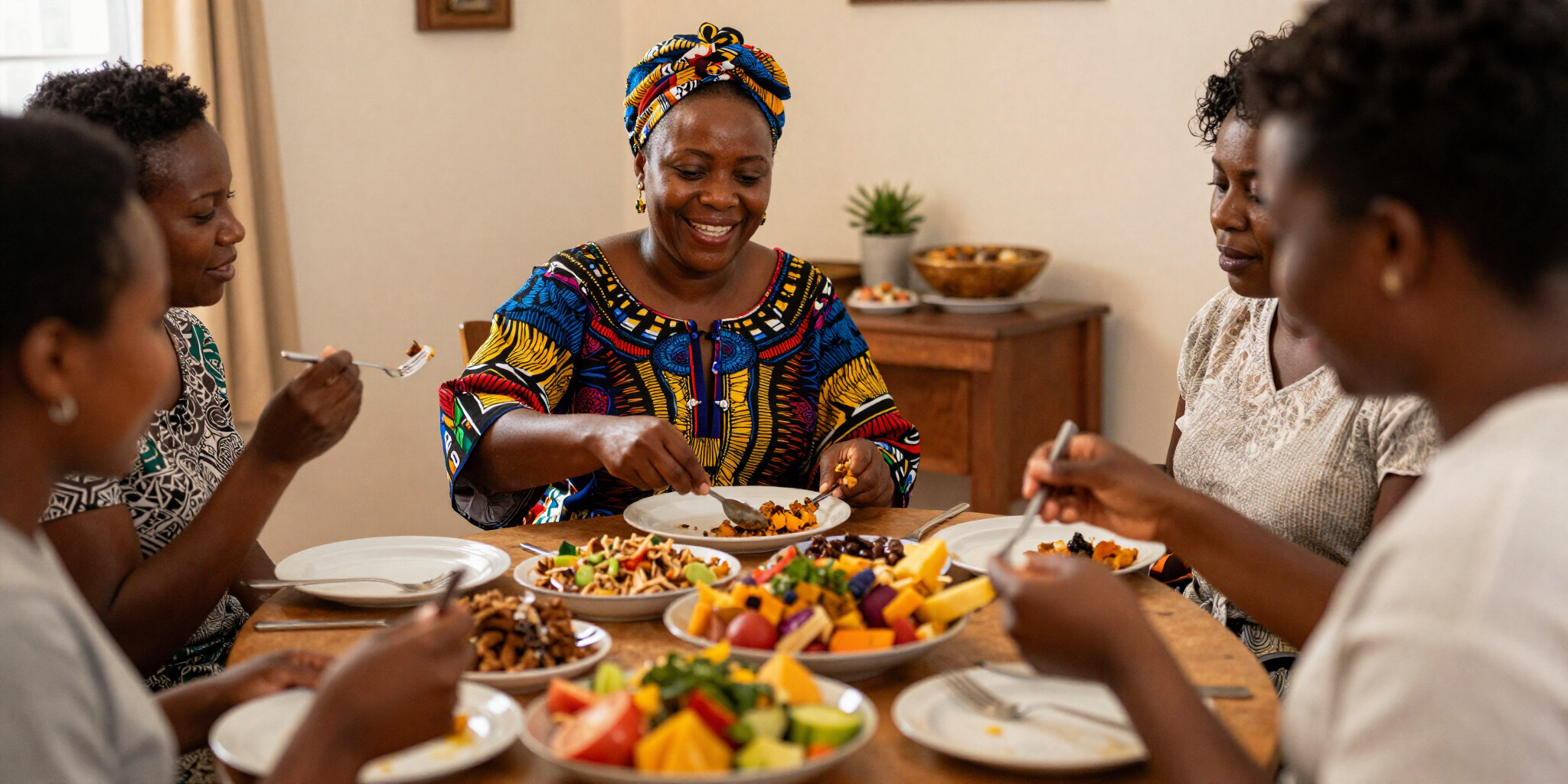
Healing is not always found in a traditional therapy room. Sometimes, connection begins around a table.
Developed as the practice application of my doctoral research, Culinary Healing Circles are a proposed culturally grounded, trauma-informed approach that brings together food preparation, cultural storytelling, psychological reflection, mindfulness, and community engagement.
The goal is to create intentional spaces where participants can explore their relationships with food, reconnect with cultural traditions, strengthen self-awareness, and experience meaningful social connection.
The Five Elements of a Culinary Healing Circle
Beyond the Kitchen
The Culinary Healing Model is designed to inform future programming in community organizations, educational settings, wellness initiatives, and behavioral health environments.
As this framework develops, structured implementation and evaluation will be essential to understanding its feasibility, participant experiences, and potential outcomes.
Because healing has a seat at the table.
01
Culinary Engagement
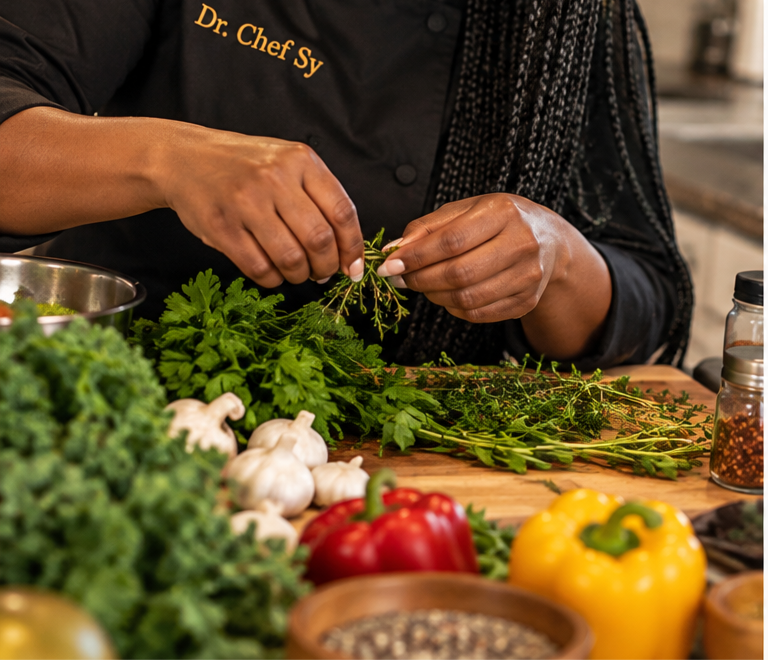
Participants engage in hands-on food preparation while learning practical culinary skills and exploring their relationship with nourishment.
02
Cultural Storytelling
Food becomes an opportunity to discuss family traditions, ancestral knowledge, cultural identity, and the memories connected to meaningful meals.
03
Emotional Awareness
Guided reflection encourages participants to recognize how stress, emotions, beliefs, and past experiences influence their behaviors and relationships with food.
04
Mindfulness & Sensory Connection
Participants explore the sensory experience of cooking, including aroma, texture, taste, and intentional attention to the present moment.
05
Community & Collective Connection
Shared experiences and supportive discussions encourage belonging, mutual understanding, and community engagement.
THE RESEARCH BEHIND CULINARY HEALING
The foundation of this work rests on the synthesis of legacy scholarship and emerging community needs, bridging the distance between clinical settings and the kitchen table.
Healing has a seat at the table.
01
Cultural Synthesis
Integrating ancestral food knowledge with contemporary psychological frameworks to validate lived experiences.
02
Systemic Analysis
Examing food access and social conditions as critical determinants of psychological and emotional wellness.
03
Healing Centered
Moving from trauma-informed to healing-centered, emphasizing strengths, empowerment, and communal joy.
The Research Gap
While food security is often addressed, the structured intersection of sensory culinary practice and formal community mental health intervention remains underexplored. This gap represents the next frontier of culturally grounded emotional care.
What’s Next
As the model expands, institutional implementation and long-term assessment will finalize the journey from concept to established community wellness protocol, ensuring that trauma-informed culinary engagement is available to all.
